Almost nothing breaks because a mover dropped it. Things break because they were packed with air around them, in a box that was never taped properly, and then driven over a stretch of road that a suspension can absorb and a wine glass cannot.
That is the whole game. Packing is not about wrapping things beautifully. It is about making sure nothing inside a box can move, and that the box itself cannot collapse. Get those two right and your plates will survive Thika Road. Get them wrong and no amount of careful lifting will save you.
Buy the right materials, and enough of them
Running out of tape at 9pm is how every bad packing job ends. Before you start, get:
- Boxes in two sizes. Small for heavy things, large for light things. Never the other way round.
- Strong packing tape — and more of it than you think. Not masking tape, and not the tape you use for parcels.
- Bubble wrap for anything with a surface that can chip, crack or scratch.
- Plain packing paper or newsprint for filling gaps. Newspaper works, but the ink transfers, so keep it away from white china and anything upholstered.
- Marker pens — two, because one always vanishes.
- Old towels, blankets and bedding. The cheapest padding you will ever own, and you have to move it anyway.
We can drop these off before the move so you can pack at your own pace — ask when you request a quote.
The two rules that prevent most breakages
- Nothing inside the box may move. Shake the box gently before you tape it. If you hear or feel movement, it is not packed. Fill every void with paper, towels or bubble wrap until it is silent.
- The box must not be able to collapse. Tape the base with three strips, not one — along the seam and across both ends. Do not overload it. If it flexes when you lift it, it will burst on the stairs.
Everything below is just these two rules applied to specific objects.
Plates: on their edge, never stacked flat
This is the one most people get wrong. A stack of flat plates in a box is a stack of plates waiting to crack under its own weight the first time the truck hits a bump.
- Wrap each plate individually in paper. Yes, each one.
- Pad the base of a small box with crumpled paper or a folded towel — a good two or three fingers deep.
- Stand the plates on their edge, like records in a rack, packed snugly against each other.
- Fill the space around and above them with paper until nothing shifts.
- Tape it, write PLATES and FRAGILE on at least two sides, and do not put anything heavy on top of it.
Plates on their edge distribute the shock along the strongest axis. Plates lying flat take it face-on. That single change saves more crockery than any other tip on this page.
Glasses and stemware
Stuff paper inside each glass first — a glass with nothing in it crushes far more easily than a glass with a paper core. Then wrap the outside, paying particular attention to the stem, which is where wine glasses always snap.
Stand glasses upright, never on their side. Put the heaviest tumblers at the bottom of the box and the delicate stemware on top, with a layer of padding in between. If you have a box with cardboard dividers, use it — it is worth more than bubble wrap for this specific job.
Mirrors, glass table tops and picture frames
Flat glass travels upright, on its edge, never lying flat and never lying under anything. A pane of glass laid flat in a truck bed will flex over every bump until it finds a fault line.
- Tape a large X across the face of the glass. It will not stop a break, but it holds the pieces together if one happens.
- Wrap in bubble wrap, then cover the corners with extra padding — corners take almost every knock.
- Sandwich between two sheets of cardboard and tape it into a slim, flat parcel.
- Tell the crew it is glass, and where it is. It rides standing up, wedged against something solid so it cannot slide.
Glass table tops come off the frame. Every time. A glass top left on a table and carried down a staircase is the single most predictable breakage in this business.
From our crews: the road decides more than the driver does. Potholes and rough patches are everywhere from the estate lanes to the back roads off Thika Road, and a truck cannot dodge all of them with a full load. Anything unwrapped in the back of that truck is taking every one of those jolts directly. A mirror carried loose on an open pickup is a coin toss — we have seen the losing side of it more than once. Wrap it, box it, stand it upright, and let the suspension take the hit instead of the glass.
Televisions, monitors and screens
Original box if you still have it. If not: take a photo of the back before you unplug anything, wrap the screen face in bubble wrap or a thick blanket, and protect the corners separately. Screens travel upright, standing on their base edge, wedged so they cannot tip. Never flat, and never with anything resting on the panel — a screen will not survive weight on its face, however light.
Keep the remote, the stand and the screws in a labelled bag taped to the back of the set. They will otherwise turn up in three different boxes.
Kitchen: the room that takes the longest
Start the kitchen earlier than you think you need to, and expect it to take twice as long as any bedroom. Some specifics:
- Knives go blade-first into a folded cardboard sleeve, taped shut, and clearly marked. Nobody should ever reach into a box and find an edge.
- Bottles and anything liquid — oil, sauces, cleaning products — get their caps taped and go in a separate box, upright, lined with a bin liner. A leaked bottle of oil will destroy a box of linen underneath it.
- Pots and pans nest inside each other with paper between them, and make excellent padding for other things.
- Defrost the fridge two days before, drain it and dry it. A fridge that goes on a truck wet arrives wet, and so does whatever is next to it. It should also stand upright, and it needs to stand still for a while at the other end before you switch it on.
- Gas cylinders and anything flammable do not travel in a loaded truck. Plan for them separately.
Would you rather we packed the fragile things?
Most people do the clothes and let us do the kitchen, the glass and the screens. It is the least stressful split there is. We bring the boxes, the wrap and the crew.
Books, files and anything heavy
Small box. Always. A large box of books is not liftable safely by one person, and its base will fail somewhere between the third floor and the truck — usually on the stairs, usually over someone’s feet. Fill big boxes with duvets, cushions and clothes instead. A well-packed house has heavy small boxes and light big ones, and the crew can stack them without a thought.
Label properly — it is packing, not admin
Once boxes are stacked in a truck you can only see their sides. So:
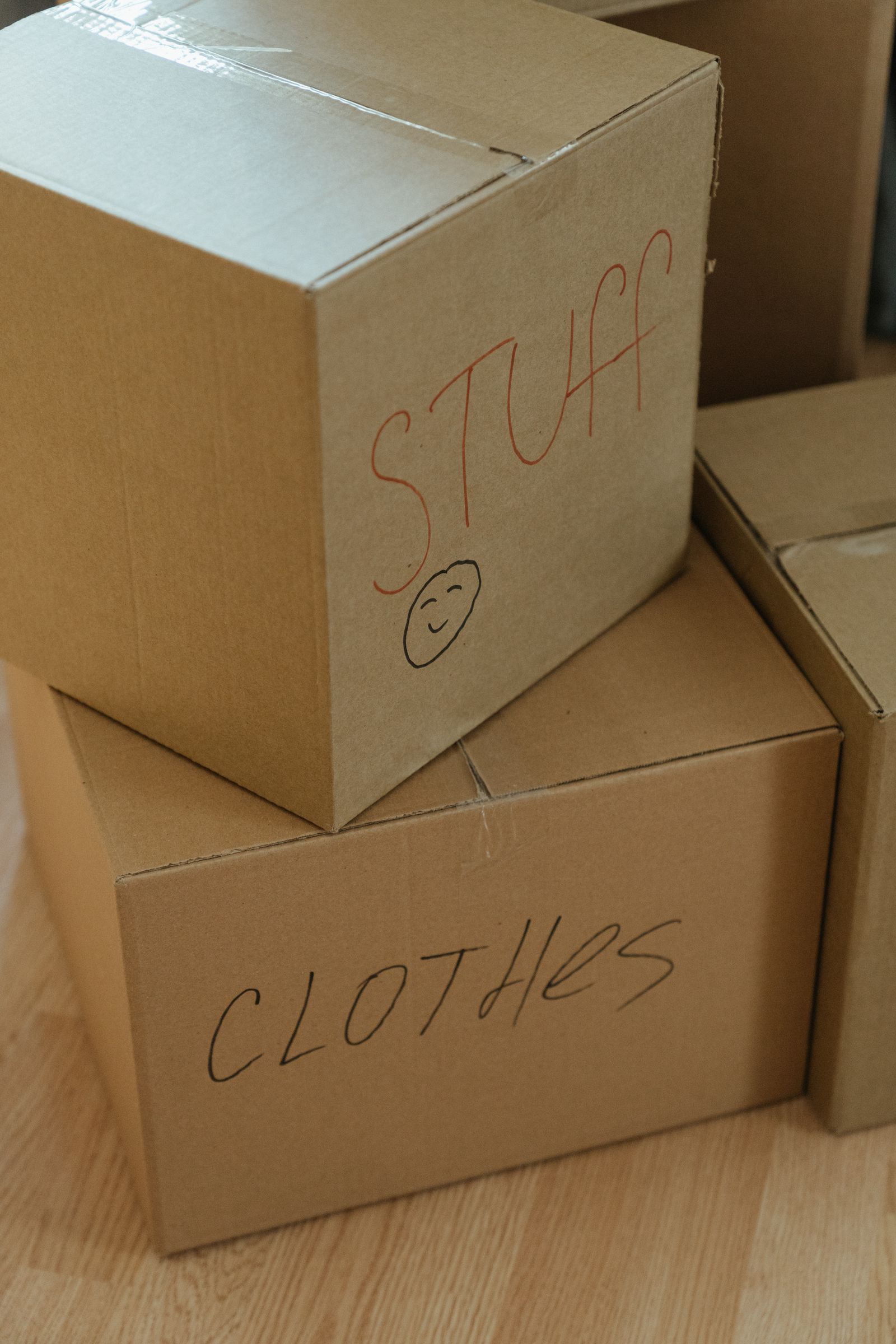
- Write on two sides, never the top.
- Write the destination room, not the origin room. “Kitchen” means the crew puts it in the new kitchen. That saves you moving it twice.
- Add one line about the contents. “Kitchen — glasses, mugs” is worth ten minutes of your life on the other side.
- Mark FRAGILE on every face of a fragile box, and point those boxes out to the crew when they arrive.
- Mark OPEN FIRST on the two or three boxes you will actually need on night one.
The essentials box that never goes on the truck
Bedding, towels, a change of clothes, chargers, medication, tea and a way to make it, toilet roll, soap, a torch, basic tools and the keys and paperwork for the new place. This box travels in your car or in your hand. So do documents, passports, title deeds, certificates, jewellery and anything with your business on it — never in a box, never on the truck.
The mistakes we see in almost every house
- Half-packed on the day. The most expensive mistake there is. The crew ends up boxing your kitchen instead of loading, the job runs into the evening, and everything after that is rushed. Be finished the night before.
- Boxes not taped underneath. One strip of tape on the base is a trapdoor.
- Overpacked large boxes that nobody can lift without straining.
- Air inside a fragile box. If it rattles, it breaks.
- Screws in a communal bag. Bolts belong taped to the furniture they came off.
- Nothing marked fragile, so the crew has no way of knowing which box holds your grandmother’s china.
If reading that list made you tired, that is a fair response — packing a house properly takes days. We can do the whole thing, or just the parts that break. Look at packing services, see how it fits into a full house move, or read the complete moving checklist to see where packing sits in the wider plan. When you are ready, get a free quote.
Related guides
The Complete Moving Checklist
Four weeks out to moving day, in the order it should happen.
Read the guide
What Actually Drives Your Moving Cost
Why packing yourself lowers the price — and what it costs you if you do it badly.
Read the guide
The Moving Day Timeline, Hour by Hour
What happens once the boxes are packed and the truck arrives.
Read the guide